Trubloff playing

Trubloff - The Mouse who wanted to play the Balalaika

This is the story of a musical mouse who lives with his family behind the panelling of the parlour bar at an inn in central Europe. A book inspired by John’s own travels around Europe.

One day a group of travelling Gypsy musicians came to perform at the inn and Trubloff is utterly entranced and desperate to learn the balalaika himself. Nabakoff, the local mouse craftsman, makes Trubloff his own balalaika and he follows his heart and his dreams, stowing away with the Gypsy troupe.

Soon he is followed by his sister who persuades him to return to the inn as their mother is desperate without him. They travel day and night through the snowy lansdcape, arriving home to see their mother greatly relieved.

At home Trubloff saves the day for the innkeeper when he is without entertainers, and he plays for the restless patrons.

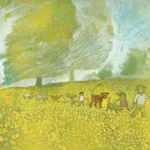
Original artwork from Trubloff - the mouse that wanted to play the balalaika
Trubloff's Dream

When Trubloff finally went to bed, he dreamed that he was the greatest balalaika-player in the whole country. In his dream the conductor of the orchestra stood humbly back while the audience clapped and clapped

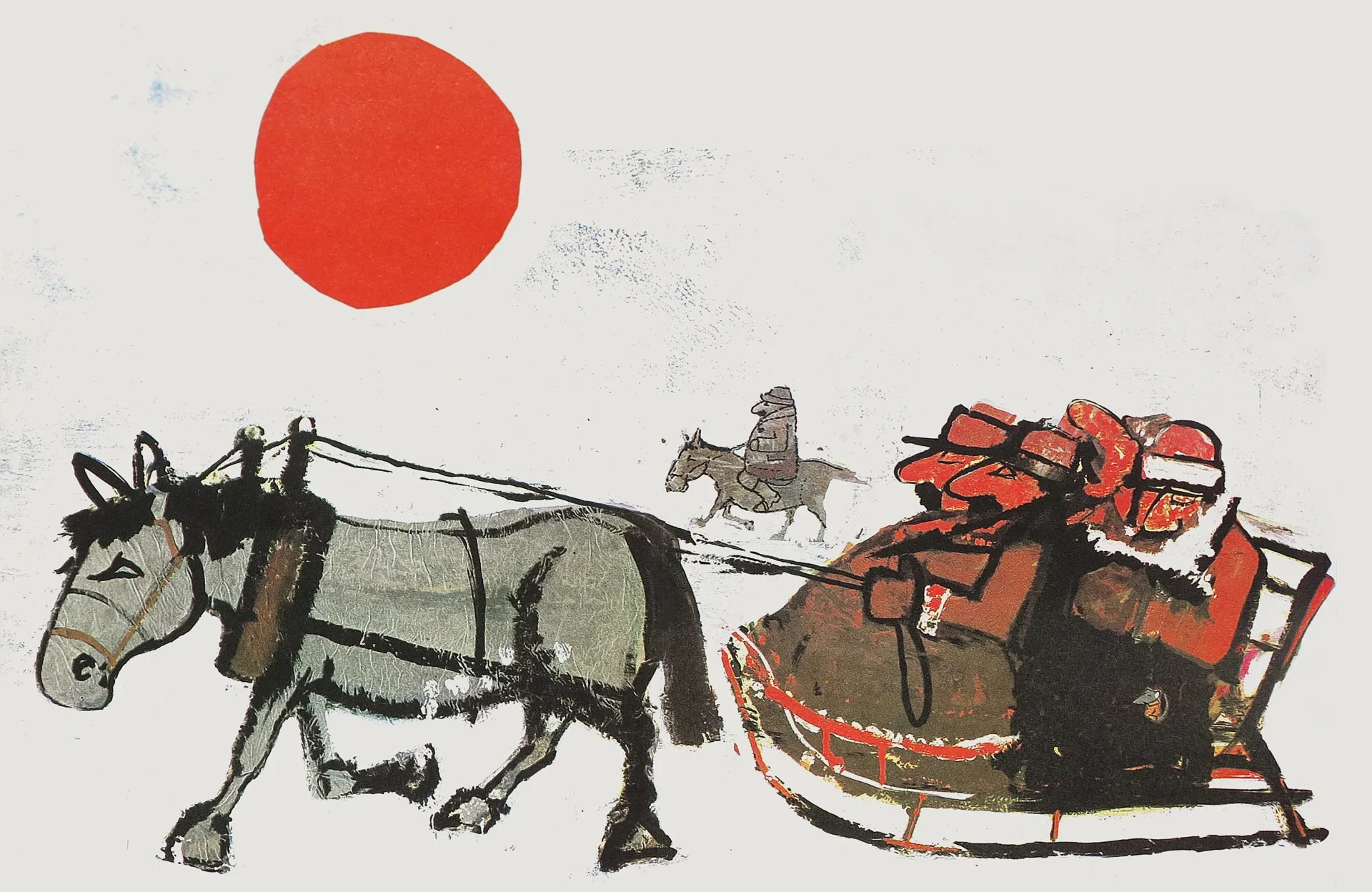
Seasons Greetings with Trubloff

But then he had an idea: he would hide in one of the gypsies’ sleighs and travel with them.

As soon as they were some distance from the village, Trubloff came out of the old gypsies’ pocket into which he had climbed as the sleigh sped over the snow.
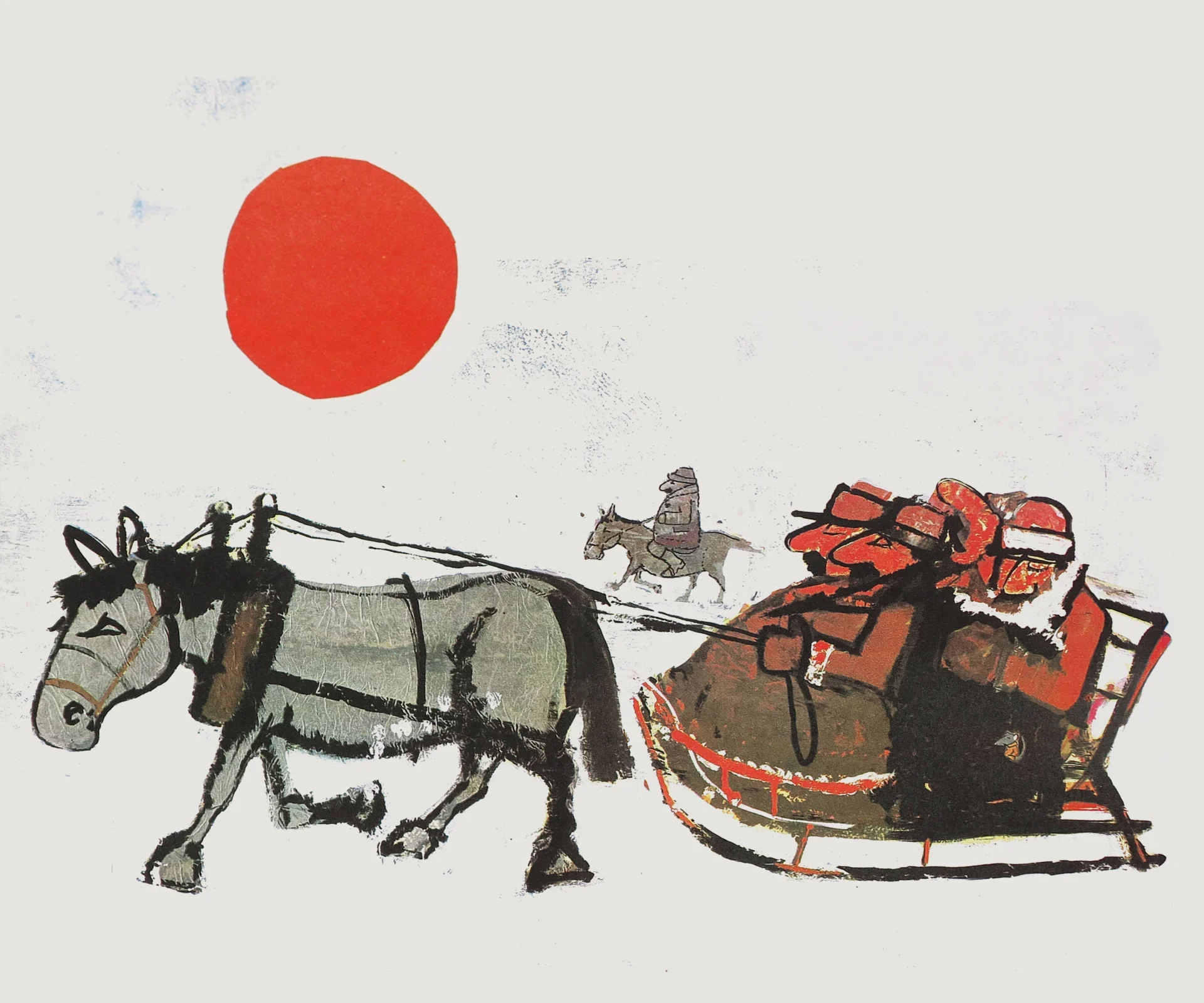
Seasons Greetings with Trubloff
Trubloffs Sister arrives to take him home

One night while the gypsies were sheltering in a barn, Trubloff’s sister arrived on skis. All of the gypsies were asleep except for the old man who was giving Trubloff a lesson. Trubloff was surprised to see his sister.

“You must come home at once”, she said. “Our Mother is very ill”

Trubloffs Sister arrives to take him home

At night they stayed wherever they could find the best shelter. Sometimes they had to curl up in the snow and sleep as best they could, but on other nights they were able to build a little fire.

Trubloff and his sister sleep
Original artwork from Trubloff - the mouse that wanted to play the balalaika

The Innkeeper was amazed to see a mouse with a balalaika, but he had to admit, after hearing him, that Trubloff played well.

New technology in printing

Trubloff – The mouse who wanted to play the balalaika is a wonderful story about following your heart and finding your dream. The beauty of this book is the incredible illustration techniques, the dark, rich colours of deep brown, purple, green and the burnt orange sun, evoking the cold, icy snowy landscape of Eastern Europe and the wonderful wooded, warm interiors of the houses.

All this wouldn’t have been possible without the recent advent of the new printing technology which meant that more daring and colourful picture books for children could be printed relatively cheaply, made possible by a process that separated colours in the artist’s work electronically. Illustrators could use a mix of colours and any shade, green, purple, or orange knowing that the printing machines could print these colours perfectly.

“Trubloff was all based on fact except that I never came across a mouse playing a balalaika in Yugoslavia”

Travels to Yugoslavia

“Trubloff was based on some wintry weeks in 1956 that I had spent in Yugoslavia with a friend, Stevan Tatic, where we did travel around on horse-drawn sleighs much like those in the book.“

”We went to a wedding by sleigh, which took about four hours. Everyone was drunk on slivovitz (plum brandy) including the driver. The sleigh would tip over from time to time and we would all roll into the snow. Gypsies played non-stop through the three days and nights that the wedding lasted, and I was greatly impressed with their music. One of the instruments they played was the balalaika.“

Trubloff the Mouse who wanted to play the Balalaika was first published in 1964 and like many of John Burningham’s books has been republished in many different languages – a favourite worldwide. The book is out of print now but it is still available if you have a look around.

You might enjoy Petr Horácek’s ‘closer look’ at a favourite illustration from Trubloff

Share this page